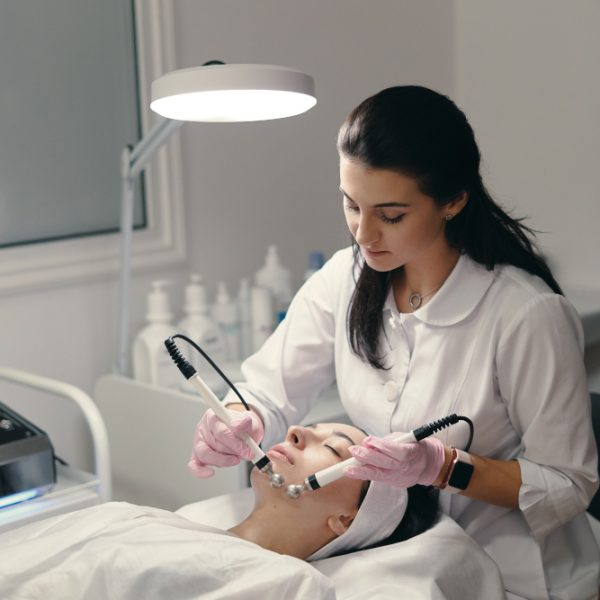
When you search for “best skin clinic in Velachery,” you’ll find dozens of options. Some promise instant results. Others advertise state-of-the-art lasers. A few claim 99% success rates. But here’s what most people don’t realize: most skin clinics aren’t actually run by dermatologists.
Let that sink in. You’re trusting your face—one of the most visible and valuable parts of your body—to someone without formal dermatology training.
They might have a “skin specialist” certificate from a 3-month course. Or they follow treatment protocols designed by marketing, not medicine. Or they operate lasers that look impressive but are managed by technicians, not doctors trained in laser safety.
This is fundamentally different from getting actual dermatology. And your results will show it.
At Skinfinity, we’ve built our entire clinic around one core principle: if you’re getting a skin treatment in Velachery, it should be assessed, designed, and executed by a dermatologist. Not a therapist. Not a technician. A medical doctor with formal dermatology training.
This is the foundation of what makes us the best skin clinic in Velachery. And it explains why our results look different.
What Actually Makes a Skin Clinic “The Best”?
Before we explain what sets Skinfinity apart, let’s define what “best” actually means in dermatology. Because it’s not what most clinics think it is.
Best doesn’t mean:
- Most expensive
- Fanciest clinic design
- Most Instagram followers
- Biggest advertising budget
- Newest laser equipment
Best actually means:
1. Medical Expertise Backs Every Decision
Your skin concern is evaluated by someone trained in diagnosing and treating skin disease—not someone reading a treatment script. A dermatologist has 5+ years of medical school and 3+ years of dermatology residency. They understand skin physiology, how different treatments work, and how to adapt when something isn’t responding as expected.
2. Personalization, Not Templates
Your skin is unique. Your concern is unique. Your healing capacity is unique. Generic protocols fail because skin isn’t one-size-fits-all. A dermatologist customizes your protocol based on your skin type, tone, concern severity, medical history, and lifestyle—not based on which package you purchase.
3. Realistic Expectations From Day One
No false promises. If your acne scars need 6 sessions to show significant improvement, you hear that upfront. If results take 3 months to peak, you understand why. If sun protection is non-negotiable for your treatment to work, you’re told clearly. This honesty builds trust and prevents disappointment.
4. Safety Is the Non-Negotiable Baseline
Advanced technology is only as safe as the hands using it. Every laser, peel, and procedure should have clear safety protocols, proper sterilization, and a dermatologist present to prevent and manage complications. Safety isn’t a feature—it’s the foundation.
5. Continuity of Care From First Visit to Results
Your initial consultation isn’t your last touchpoint. Your dermatologist tracks your progress, adjusts protocols if needed, documents results, and ensures you’re following home care correctly. This ongoing relationship is what transforms temporary skin improvement into lasting results.
6. Honest Communication About What Actually Works
Trendy treatments get hyped. The best clinics recommend what’s proven for your specific concern, not what’s most profitable. They also clearly distinguish between what will help you and what’s marketing hype.
If a skin clinic checks all these boxes, it’s probably the best one you’ll find. If it’s missing even one? You’re gambling with your face.
The Dermatology Difference: Why Credentials Actually Matter
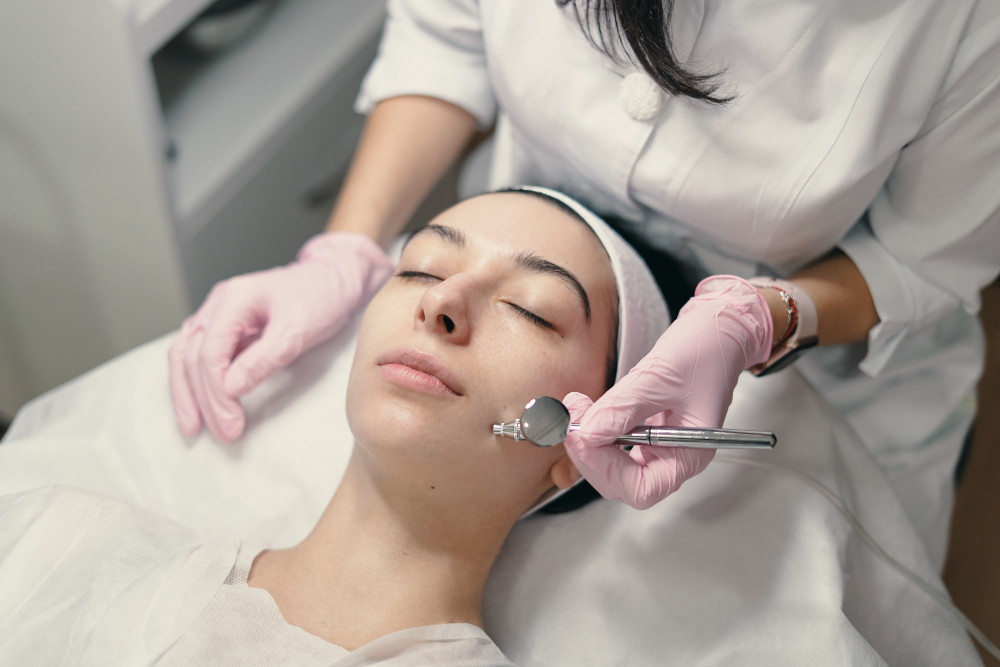
Here’s what separates a dermatologist from everyone else calling themselves a “skin specialist”:
A dermatologist is a medical doctor who has completed:
- Medical school (5–6 years)
- Dermatology residency (3–4 years of supervised training in skin disease, laser safety, and aesthetic procedures)
- Continuous medical education to stay current on new treatments and technologies
A “skin specialist” without dermatology training might have:
- A 3–6 month cosmetic course
- Hands-on training from a machine distributor
- Practical experience operating equipment
- But no medical foundation in skin physiology, pathology, or diagnosis
This difference shows up in real situations:
When Something Goes Wrong
Every treatment carries some risk. Laser burns, allergic reactions, scarring, or infections can happen. When they do:
- A dermatologist recognizes the complication immediately, understands why it happened, knows how to treat it or prevent it from worsening, and adjusts future treatments accordingly.
- A non-dermatologist might not recognize it as a complication. They might tell you it’s “normal” and part of healing when it’s actually a problem that needs medical intervention.
When Your Skin Is Complex
Most people’s skin is complex. Hormonal acne looks different from bacterial acne, but they’re treated completely differently. Melasma in darker skin requires different laser protocols than melasma in fair skin. Anti-aging in thin, sensitive skin requires different approaches than in thick, resilient skin.
- A dermatologist understands these nuances because they’ve studied them. They assess your individual presentation and customize treatment accordingly.
- A non-dermatologist follows a protocol that works for “typical” patients and hopes your skin fits the template.
When Results Plateau
Sometimes, halfway through treatment, your skin stops responding to the same protocol. This happens because skin adapts, or because the initial protocol was addressing a symptom instead of the root cause.
- A dermatologist investigates why progress has stopped, adjusts the approach, and gets you back on track.
- A non-dermatologist might recommend more sessions of the same treatment, assuming “more = better.”
When You Have Sensitive or Reactive Skin
Sensitive skin requires careful navigation. Certain ingredients cause reactions. Certain laser settings damage the skin barrier. Certain peels are too aggressive.
A dermatologist knows which treatments are safe for sensitive skin, which to avoid, and how to strengthen your skin barrier while treating your concern.
A non-dermatologist might recommend popular treatments without considering your sensitivity, and your skin reacts badly.
At Skinfinity, this isn’t just marketing. We’re structuring our clinic so that every patient consultation, every treatment plan, and every follow-up is handled by a dermatologist.
Not a therapist designing your protocol. Not a technician deciding if you need more sessions. A doctor making those calls.
The Skin Conditions That Absolutely Require a Real Dermatologist
Let’s get specific. Here are the skin concerns that demand dermatology—and why templates fail:
Acne Scars: One Size Definitely Does NOT Fit All
Acne scars come in three distinct types, and each requires a completely different treatment approach:
Boxcar scars have sharp, defined edges and look like small pits. They respond best to subcision (breaking the fibrous bands pulling the skin down) combined with fractional laser resurfacing.
Rolling scars have soft, rolling edges and look like gentle waves in the skin. They respond better to microneedling with radiofrequency and collagen-stimulating treatments than to aggressive laser.
Icepick scars are narrow, deep puncture wounds. They often need aggressive laser resurfacing or sometimes even surgical excision.
A clinic that recommends “laser treatment for all scars” is doing templated medicine. A dermatologist looks at your specific scar type, assesses your skin depth and healing capacity, considers your skin tone (because lasers affect darker skin differently), and recommends the precise combination that will work for you.
This is why some patients see amazing scar improvement in 4 sessions, while others get minimal results from 10 sessions of generic “scar laser.” The difference isn’t the machine. It’s dermatology.
Melasma: Why This Is So Tricky
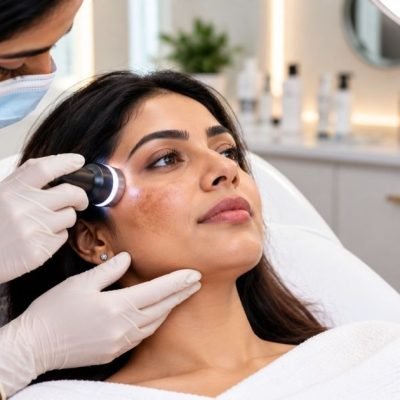
Melasma is the stubborn brown patches on cheeks, forehead, and nose that plague so many people in Chennai’s sunny climate. It’s driven by melanin-producing cells going haywire—often triggered by sun exposure, hormones, or genetic predisposition.
Here’s what most clinics tell you: “Use SPF 50 and kojic acid serum, and it will fade.”
Here’s the reality: SPF 50 prevents melasma from worsening. It doesn’t reverse existing patches. You need active treatment—laser toning, medical-grade chemical peels, targeted depigmenting serums—to actually lighten the pigmentation that’s already there.
But here’s where dermatology matters: not all lasers are created equal for melasma. Some work great for fair skin but cause post-inflammatory hyperpigmentation (making melasma worse) in darker skin tones. The wrong laser protocol on Indian skin can turn a brown patch into a darker brown patch.
A dermatologist trained in treating diverse skin tones—which is standard in Chennai—knows which laser, what energy level, and what combination of treatments works safely on your specific skin. They also understand the importance of strict sun protection during and after treatment, because UV exposure will undo your results.
Active Acne: Why Antibiotics Alone Fail
Most acne treatments start with topical antibiotics or oral doxycycline. They work for a few months. Then bacterial resistance builds, acne returns, and you’re back where you started.
A dermatologist-designed acne protocol addresses the multiple factors driving acne:
- Bacteria control: Antibiotics + benzoyl peroxide (which bacteria can’t build resistance to)
- Sebum regulation: Retinoids or hormonal management (depending on your acne type)
- Pore unclogging: Chemical peels tailored to your skin type
- Inflammation reduction: Oral or topical anti-inflammatories based on severity
- Preventive skincare: Specific products for your skin type and concern (not generic “acne wash”)
This multi-layered approach doesn’t just clear acne faster. It prevents scarring and reduces the chance of recurrence.
A non-dermatologist might prescribe antibiotics and recommend generic acne facials, hoping that works. A dermatologist designs a complete protocol that addresses root causes.
Melasma + Acne Scars + Pigmentation (The Complex Case)
Some patients come in with multiple concerns: active acne, acne scars, post-acne pigmentation, and melasma. This is incredibly common, especially in people who’ve struggled with acne for years.
A template clinic treats these sequentially: “First, we’ll do acne treatment, then scar treatment, then pigmentation treatment.” This takes 12–18 months.
A dermatologist designs a layered protocol that addresses multiple concerns simultaneously: “We’ll use laser for scars and pigmentation, peels for surface issues, topicals for acne and barrier support.” This gets you results faster and more efficiently.
How Skinfinity’s Dermatology-Led Model Works in Practice
Now let’s walk through exactly how we do things differently—and why it matters for your skin:
Every Consultation Is With a Dermatologist
When you book at Skinfinity, you’re not seeing a “skin consultant” or “treatment coordinator.” You’re seeing a dermatologist. They don’t just listen to your concern; they examine your skin, assess its characteristics, review your medical history, and understand your goals.
This consultation is diagnostic, not transactional.
A dermatologist might discover that your “acne” is actually rosacea, or that your acne is driven by hormonal factors, food sensitivities, or a compromised skin barrier—not just bacteria. The protocol reflects that understanding.
You’re not just getting “acne package #3.” You’re getting a treatment plan custom-built for your actual skin.
Multiple Duty Dermatologists Mean You’re Never Delayed
Single-dermatologist clinics create a bottleneck. If that one doctor is fully booked for 3 months, you wait. If they take a vacation, you wait. If they’re having an off day, you still see them because you have no other choice.
Skinfinity has multiple dermatologists across clinic hours (morning, afternoon, evening). This means:
- You get an appointment within days, not weeks or months
- Your treatment isn’t delayed because one doctor isn’t available
- You have scheduling flexibility
- If one dermatologist is unavailable, you still see another qualified doctor
- You get multiple expert perspectives on complex cases if needed
This isn’t just convenient. It’s medically sound. Dermatology is a team sport, and the best clinics reflect that structure.
Treatment Plans Are Customized, Not Templated
Here’s what actual customization looks like at Skinfinity:
Step 1: Comprehensive Skin Analysis
- Skin type (oily, dry, combination, sensitive) assessment
- Skin tone and ethnicity-specific considerations (important for laser safety)
- Concern severity mapping (mild, moderate, severe)
- Complete medical history (hormones, medications, allergies)
- Lifestyle factors (sun exposure, stress, sleep, diet)
- Previous treatments and how your skin responded
Step 2: Root Cause Analysis
- Is your acne bacterial, hormonal, or barrier-related?
- Is your pigmentation from sun damage, melasma, or post-inflammatory marks?
- Are your wrinkles from sun damage, loss of elasticity, or loss of volume?
- Are your scars shallow or deep? Sharp-edged or rolling?
- What’s preventing your skin from healing itself?
Step 3: Custom Protocol Design
- Specific treatment selection (which laser, which peel strength, which combination)
- Session count based on your concern severity and skin characteristics (not a standard package)
- Session spacing tailored to your skin’s healing capacity
- Expected realistic timeline for results (not oversold)
- Clear cost breakdown specific to your protocol
Step 4: Home Care Prescription
- Specific skincare products for your skin type and concern
- Clear instructions on how to use them and why
- Sun protection strategy tailored to your treatment (not just generic SPF advice)
- Lifestyle modifications that support treatment (sleep, hydration, stress management)
- Products to avoid during treatment
This is radically different from most clinics where you book “Acne Treatment Package” or “Scar Removal Package” and get the same protocol as dozens of other patients, regardless of whether your acne or scars are the same type as theirs.
Every Procedure Is Doctor-Supervised, Not Technician-Performed
At Skinfinity, the dermatologist doesn’t just design your protocol and hand you off to a technician in another room. The doctor supervises the procedure.
This means:
- Real-time assessment during treatment (the dermatologist is adjusting laser settings based on how your skin is responding, not running on preset autopilot)
- Immediate problem-solving if anything unexpected happens
- Expertise applied during the procedure, not just in the planning phase
- Safety checks before, during, and after treatment by someone trained in complication prevention
Compare this to clinics where a technician operates the laser and the dermatologist checks in briefly. The technician—who has much less training—is making real-time decisions about settings, timing, and safety.
Follow-Up Care Isn’t Optional—It’s Built Into Your Success
Your first appointment isn’t your last interaction with your dermatologist. Skinfinity schedules follow-up assessments to:
- Track exactly how your skin responded to treatment
- Identify any complications early (and address them immediately)
- Adjust your protocol if your skin isn’t responding as expected
- Document progress with detailed before-and-after tracking
- Verify you’re following home care correctly
- Plan upcoming sessions based on actual progress (not a preset schedule)
- Adjust expectations if needed based on how your skin actually heals
This continuity is what transforms temporary skin improvement into lasting results. You’re not left wondering, “Am I on track?” Your dermatologist is actively monitoring and ensuring success.
The Best Skin Clinic Is Defined by How It Treats You — Not What It Promises
Finding the best skin clinic in Velachery isn’t about chasing quick fixes, flashy machines, or aggressive marketing. It’s about choosing a clinic that understands your skin as an individual system — one that needs careful assessment, thoughtful planning, and responsible care.
The clinics that deliver real, lasting results are those that prioritise proper evaluation, customised treatment plans, and close medical supervision at every stage. They don’t rely on generic packages or one-size-fits-all protocols. Instead, they adapt treatments to your skin type, concern severity, and how your skin actually responds over time.
At Skinfinity, this approach shapes everything we do — from the first consultation to the final follow-up. Each treatment is designed with safety, precision, and long-term skin health in mind, especially for Indian skin and Chennai’s climate.
Whether your concern is acne, pigmentation, scars, or early ageing, the right care isn’t about speed or shortcuts. It’s about choosing a clinic that values clarity, accountability, and results that improve — and protect — your skin over time.
Because when your skin is treated thoughtfully, the difference isn’t just visible.
It’s sustainable.