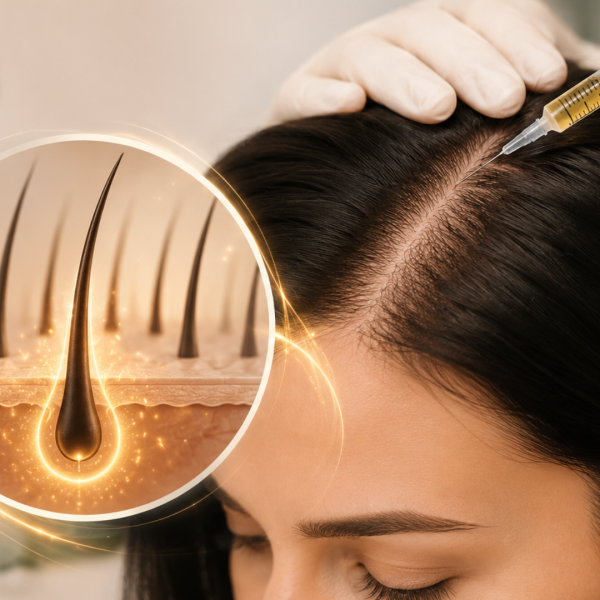
Hair thinning, receding hairlines and early baldness affect confidence long before they become medically serious. Many people try oils, home remedies and random supplements but see little change in actual hair density or coverage. Platelet-rich plasma (PRP) treatment for hair growth has emerged as a clinically used, non-surgical option that targets the root cause by stimulating weakened hair follicles and improving scalp health from within.
In this guide, we’ll break down the top 10 benefits of PRP treatment for hair growth, explain how it works in simple terms, and help you understand who can realistically expect results and when to consider it.
What Is PRP Treatment for Hair Growth?
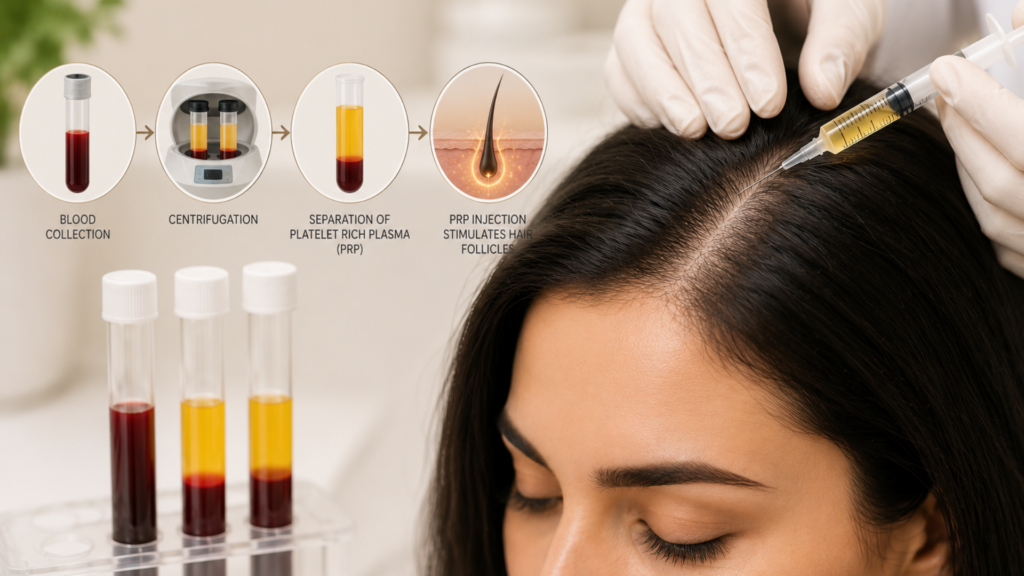
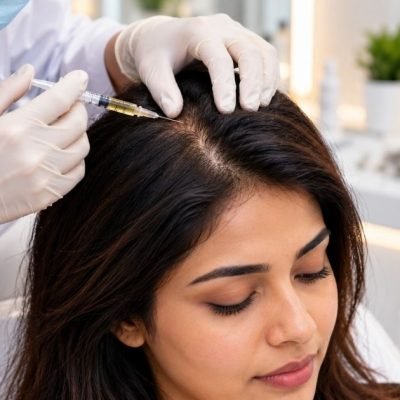
PRP (platelet-rich plasma) treatment for hair growth uses a small sample of your own blood, processed to concentrate platelets rich in growth factors, and injects it into targeted areas of your scalp. These growth factors help repair and stimulate hair follicles, improve blood flow, and support stronger, thicker hair over time.
Doctors and hair specialists commonly use PRP as a supportive therapy for pattern baldness, diffuse thinning and post-transplant care because it works at the follicle level rather than just on the hair shaft. It is not a magic cure, but when used correctly and at the right stage of hair loss, PRP treatment for hair growth can produce visible improvements in density, thickness and shedding.
How Does PRP Help in Hair Growth?
To understand the benefits of PRP treatment for hair growth, it helps to know what happens during the procedure.
- A small amount of blood is drawn from your arm.
- The sample is spun in a centrifuge to separate and concentrate platelets in plasma.
- The platelet-rich plasma is injected into thinning or balding areas on the scalp using fine needles.
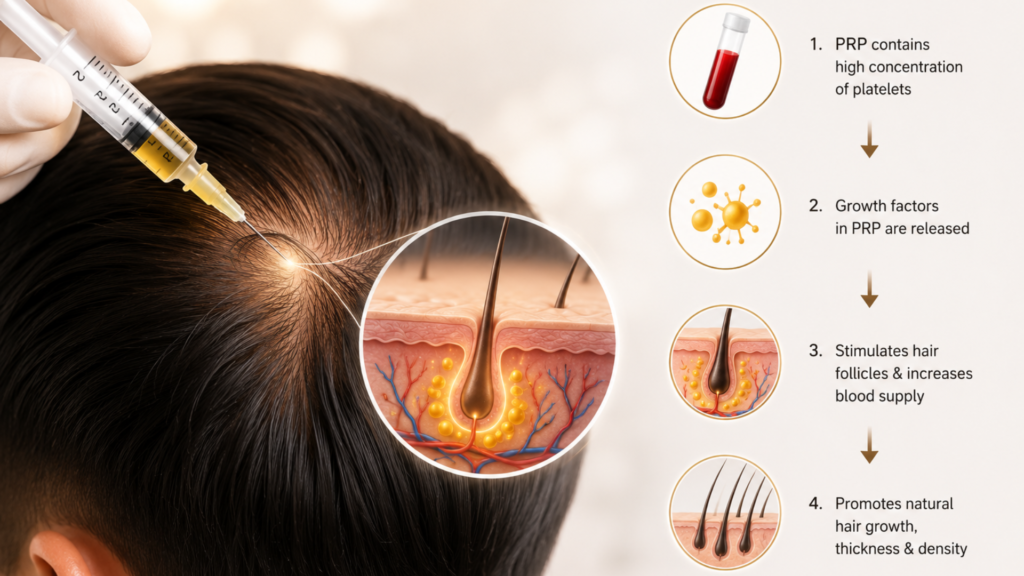
Platelets release growth factors that:
- Boost blood supply to the follicles.
- Encourage dormant or weak follicles to restart growth activity.
- Support the growth phase of the hair cycle, leading to thicker, healthier strands.
Over a series of sessions, this process can reduce hair fall, increase density and improve the overall quality of your hair, which is why PRP treatment for hair growth features prominently in modern hair loss protocols. Also Check…
Top 10 Benefits of PRP Treatment for Hair Growth
1. Stimulates Dormant Hair Follicles
One of the biggest benefits of PRP treatment for hair growth is its ability to “wake up” dormant or weakened follicles that have stopped producing visible hair. Growth factors in platelet-rich plasma act like a natural boost for these follicles, encouraging them to restart the hair production process.
In areas where hair has thinned but follicles are still present, PRP may help turn fine, miniaturised hairs into thicker strands, improving coverage over the scalp.
2. Reduces Hair Fall and Excess Shedding
Many patients report that one of the earliest changes after PRP treatment for hair growth is a noticeable reduction in daily hair fall and shedding. By strengthening the hair roots and improving the health of the scalp environment, PRP helps slow the progression of pattern baldness and diffuse thinning.
When follicles are better nourished and supported, fewer hairs fall out prematurely. This stabilisation stage is crucial because it prevents further loss while other benefits, like improved density, build up over time.
3. Increases Hair Density and Thickness
Another key benefit of PRP treatment for hair growth is increased hair density and shaft thickness. Clinical experience and published studies show that PRP can improve the number of active hairs per square centimetre and increase the diameter of existing strands in responsive patients.
In practical terms, this means:
- Thinning areas look fuller and better covered.
- The scalp is less visible through the hair.
- Hair looks more voluminous even without styling products.
For men and women struggling with widening hair parts or see-through scalps, this improvement in density can make a significant aesthetic difference.
4. Improves Overall Hair Quality and Texture
Beyond density, PRP treatment for hair growth also enhances overall hair quality. By improving blood supply and nutrient delivery to the follicles, PRP supports stronger, more resilient hair.
Patients often notice:
- Less breakage when combing or washing.
- Smoother texture and better shine.
- Hair that feels stronger from root to tip.
Healthier hair shafts are less likely to snap or frizz, which helps maintain volume and length over time.
5. Non-Surgical, Minimally Invasive Procedure
Compared to surgical options like hair transplant, PRP treatment for hair growth is non-surgical and minimally invasive. It involves injections rather than cuts or sutures and is performed in an outpatient clinic setting.
For people who are not ready for surgery or whose hair loss is still at an early stage, PRP provides an intermediate option that addresses the follicle while avoiding the downtime and complexity of surgical procedures. It can also be used alongside or after hair transplant to support graft survival and long-term results.
6. Natural and Safe – Uses Your Own Blood
PRP treatment for hair growth uses your own blood, which reduces the risk of allergic reactions and foreign-body responses. The plasma injected into your scalp is autologous, meaning it comes from you and is processed in a controlled, sterile environment.
Most people tolerate PRP well, and common side effects are usually mild and short-lived, such as temporary soreness, swelling or redness at injection sites. When performed by trained professionals under proper hygiene, PRP offers a natural way to support hair growth using the body’s own healing mechanisms.
7. Quick Sessions with Minimal Downtime
Another practical benefit of PRP treatment for hair growth is convenience. A typical session, including blood draw, processing and injections, usually takes between 30 and 90 minutes depending on the clinic protocol.
Most patients can:
- Return to work the same day.
- Continue routine activities with only minor precautions.
- Experience only brief tenderness or swelling that settles quickly.
This makes PRP suitable for busy professionals who want to address hair loss without major interruptions to their schedule.
8. Suitable for Both Men and Women with Early Hair Loss
PRP treatment for hair growth is used for both men and women experiencing early to moderate hair loss, including pattern baldness, diffuse thinning and widening hair parts. It can be helpful in cases where follicles are still present but progressively miniaturising.
Because it targets the follicle itself, PRP can fit into broader hair loss management plans, alongside lifestyle changes, medical treatments and topical therapies for different types of alopecia. Suitability is always evaluated individually, but many adults with thinning hair can consider PRP as part of their strategy.
9. Can Be Combined with Other Hair Loss Treatments
PRP treatment for hair growth rarely works in isolation. In modern practice, it is often combined with other evidence-based treatments to maximise results.
It can be paired with:
- Oral or topical medications for pattern baldness.
- Low-level laser therapy or certain in-clinic devices.
- Hair transplant, both before and after surgery, to support grafts and native hair.
Because PRP addresses follicle health and scalp microenvironment, it complements therapies that work through hormonal pathways or mechanical redistribution (such as transplant).
10. Long-Lasting Improvement with Maintenance Sessions
Finally, one of the long-term benefits of PRP treatment for hair growth is sustained improvement with proper maintenance. PRP is not a one-time cure; most protocols involve a series of initial sessions followed by spaced maintenance visits.
Typically:
- Initial phase: multiple sessions spread over a few months.
- Maintenance phase: periodic booster sessions to preserve gains in density, thickness and reduced shedding.
When patients follow a personalised plan, improvements often persist longer, and ongoing support helps slow future thinning.
What Results Can You Expect from PRP Hair Treatment?
Results from PRP treatment for hair growth vary from person to person, but common patterns have emerged in clinical practice and research.
Many patients experience:
- Reduced daily hair fall within a few weeks or early sessions.
- Gradual increase in fullness and better coverage over 3–6 months.
- Visible improvements in density and shaft thickness after completing the initial series of sessions.
However, advanced bald patches with long-standing follicle damage may respond less, and realistic expectations are crucial. PRP works best when started early, before follicles are completely lost.
Who Is an Ideal Candidate for PRP Treatment for Hair Growth?
You may be a good candidate for PRP treatment for hair growth if you:
- Notice early thinning, widening hair part or a receding hairline.
- Have mild to moderate pattern baldness with visible follicles still present.
- Want a non-surgical option or supportive treatment to slow further loss.
Certain medical conditions, blood disorders or uncontrolled illnesses may require caution or make you unsuitable for PRP, so a proper consultation with a qualified doctor is essential before starting.
Is PRP Hair Treatment Safe? Possible Side Effects
PRP treatment for hair growth is generally considered safe when performed by trained professionals in a clinical environment, but like any procedure it has potential side effects.
Common side effects include:
- Mild pain or discomfort at injection sites.
- Temporary redness, swelling or bruising on the scalp.
- Brief sensitivity when touching or combing the treated areas.
Serious complications are rare when proper sterile technique and protocols are followed, especially since the plasma used is taken from your own blood.
PRP vs Other Hair Loss Treatments
PRP treatment for hair growth sits between simple topical solutions and surgical hair restoration options.
- Compared to medications: PRP works directly on the follicles through growth factors, while common medications act through hormonal or biochemical pathways; they can complement each other rather than compete.
- Compared to hair transplant: PRP does not move hair from one area to another, so it’s better suited for early to moderate loss; transplant is used for advanced baldness where donor hair is redistributed, often with PRP as support.
Understanding these differences helps you choose a realistic plan with your doctor instead of relying on a single solution.
Considering PRP Treatment for Hair Growth?
If you’re dealing with progressive hair thinning, early bald spots or a receding hairline, choosing the right clinic for PRP treatment for hair growth is just as important as choosing the treatment itself. A detailed consultation should include a thorough scalp examination, review of your medical history and a personalised plan that combines PRP with other appropriate therapies to maximise results and protect your long-term hair health.
Skinfinity Aesthetics in Velachery, Chennai stands out as one of the best aesthetic and hair clinics to consider for PRP treatment if you’re looking for safe, effective and evidence-based care. The clinic focuses on advanced, FDA-approved hair restoration protocols, expert trichologist-led treatments and a modern, comfortable setting where each PRP plan is tailored to your pattern of hair loss and lifestyle.
If you’re ready to explore PRP treatment for hair growth, booking a consultation at Skinfinity Aesthetics in Chennai can be a strong first step towards healthier, thicker hair and renewed confidence.